
Find the Problem First: Using Design Thinking to Identify High-Value AI Opportunities

Many organisations start their AI journey by asking:
“What can Copilot do?”
At First AI, we start somewhere else:
“What problem are we trying to solve?”
Because deploying more AI isn't the goal. The goal is to improve how work gets done.
That's why we use Design Thinking and Needs Assessments to understand the people, processes and pain points behind a workflow before recommending the technology.
Start with the work, not the tool
A First AI Needs Assessment is a structured discovery process designed to uncover where AI can create meaningful business value.
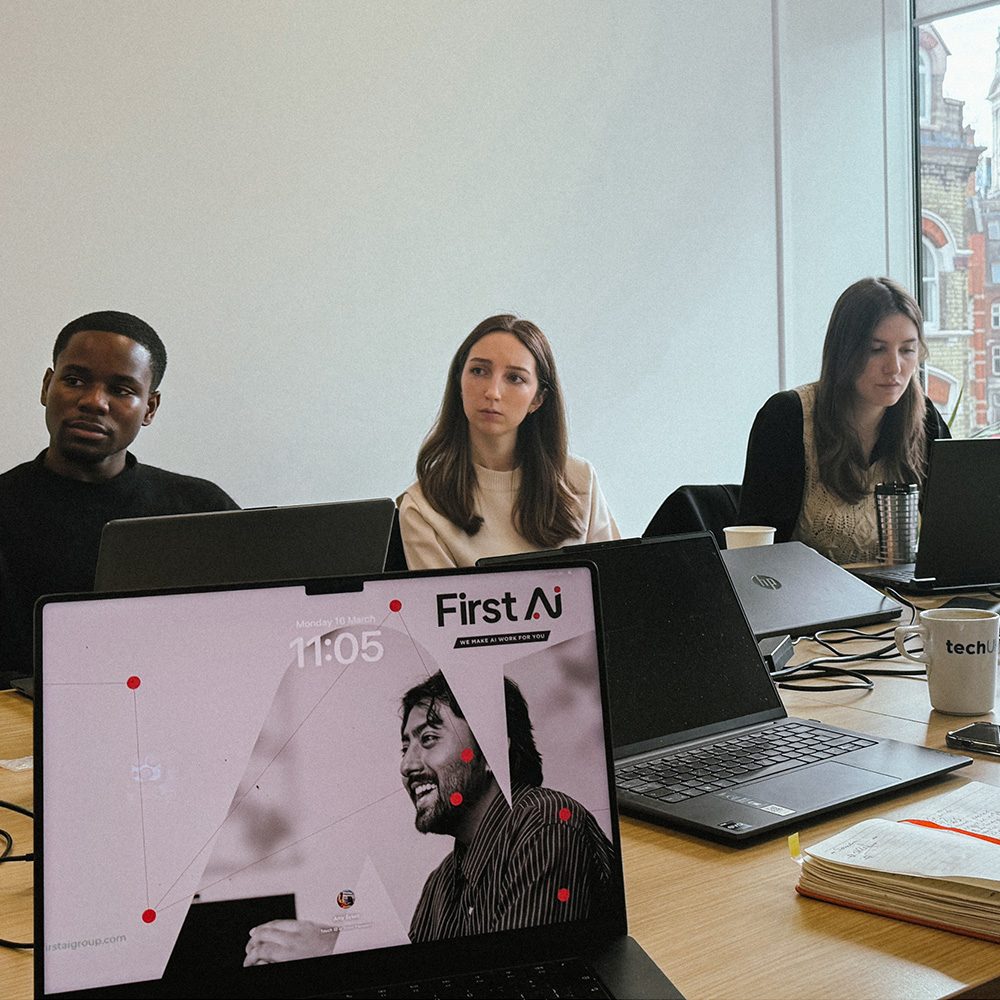
Through workshops, interviews and collaborative sessions, we work with teams to understand how work happens today: where people lose time, where processes create friction, which tasks are repetitive and where better access to information, automation or AI could make a genuine difference.
The principle is simple:
Understand the work before recommending the AI.
From pain point to AI opportunity
Our Design Thinking approach takes teams through five practical stages:
Empathise
Understand how people actually work, their frustrations, repetitive tasks, bottlenecks and unmet needs.
Define
Turn those observations into clear business problems and outcomes.
Ideate
Explore how AI could address them. Using collaborative tools such as Microsoft Whiteboard, teams identify potential Copilot use cases, prompts, agents, automations and workflow improvements.
Prioritise
Assess opportunities against business value, feasibility and organisational readiness. Not every AI idea needs to become a project.
Build
Take the strongest opportunities forward into practical solutions, whether that's a Copilot workflow, AI agent, automation or wider transformation initiative.
This moves the conversation from “Where could we use AI?” to “Where can AI make the biggest difference?”
Microsoft-first. AI-enabled.
For many organisations, Microsoft 365 provides the natural foundation because it's already where their people work and where much of their organisational knowledge sits.
We help clients get more from that existing investment, using Microsoft Copilot and the wider Microsoft ecosystem to transform everyday work.
But we're not driven by the tool.
Where a specialist platform such as Claude, Harvey or Legora, or a bespoke AI agent is better suited to the task, we'll recommend it.
The right AI, for the right task, in the right workflow.

Turning discovery into delivery
The outcome of a Needs Assessment isn't another report that sits on a shelf.
Clients leave with a practical view of where AI can create value, including:
- Prioritised AI opportunities
- Copilot, automation and agent use cases
- Workflow transformation recommendations
- Value and feasibility assessments
- Success measures and next steps
- A clear route from discovery into delivery
And that's important.
Identifying an interesting AI use case is relatively easy. Turning it into something that works within the organisation, with the right people, processes, technology and governance around it, is where the real work begins.
Why Design Thinking works for AI
Design Thinking has its roots in product design and engineering, with one enduring principle: start with human needs.
That principle is particularly relevant to AI.
The organisations that create the most value won't necessarily be those deploying the most AI tools. They'll be the ones that understand where AI can genuinely improve work and then have the capability to make that change happen.
That's what we mean by making AI operational.
People first. Problem first. Technology second. Value always.

Ready to Find Where AI Can Create Real Value?
If you're exploring Microsoft Copilot, AI agents or automation but aren't sure where to focus first, start with the problem, not the technology.
Book a Discovery Call with First AI to explore your workflows, identify high-value opportunities and understand the practical steps towards making AI operational across your organisation.