
From Great Prompts to AI-Powered Workflows

The best AI use cases rarely start with a big transformation programme. They often start with one person finding a better way to do their work.
A great prompt can save someone 20 minutes. A great prompt that gets shared across a team can save hundreds of hours. And a great prompt that reveals a repeatable workflow can become something much bigger: an automation, a Copilot workflow or even an AI agent.
That’s why, at First AI, we don’t see prompts as disposable instructions, but as potential starting points for scaling AI across an organisation. Many automation and AI agent ideas emerge from prompts that have already proven successful in practice. By identifying the prompts and approaches that consistently deliver value, organisations can uncover opportunities to build repeatable workflows, develop solutions in Copilot Studio and create AI agents that take those use cases further.
From individual use to organisational capability
One of the patterns we see through AI adoption programmes is that people quickly discover their own ways of working with AI. Someone finds a better way to prepare for a meeting. Another creates a prompt that speeds up contract summaries. Someone else develops a useful approach to analysing documents, drafting communications or turning unstructured information into something useful.
The opportunity is not to let those discoveries stay with the individual.
Capture them. Test them. Improve them. Share them.
Because when one person's successful approach becomes a team's way of working, AI starts to create organisational value.
Build a prompt library of what works
It's easy to think about prompt libraries as collections of clever prompts, but a valuable prompt library should capture proven ways of using AI to solve real problems.
For example:
The task:
Prepare for a stakeholder meeting
The prompt:
A structured approach to summarising previous interactions, identifying key issues and preparing questions
The outcome:
Less preparation time and more consistent meeting preparation
Or
The task:
Review a low-value contract
The approach:
Use AI alongside a defined checklist to identify key clauses, risks and missing information
The outcome:
Faster initial review while retaining human oversight
The important thing isn't the wording of the prompt. It's the problem it solves and the outcome it creates. That's the difference between collecting prompts and building AI capability.
What should teams be sharing?
Rather than asking people to simply submit their “best prompt”, ask a better question:
What have you found that genuinely makes your work better?
That could be:
- A prompt that consistently saves time
- A repeatable AI workflow
- A useful way of working with documents
- A meeting or research workflow
- A structured approach to analysis
- A task that AI can now complete in minutes rather than hours
- A use case that colleagues could easily replicate
The most valuable examples are usually specific, repeatable and connected to real work. They also provide evidence. If ten people are independently finding value from the same type of workflow, you've found a potential opportunity to scale it.

From prompt to workflow
A prompt that works once is useful, but when it delivers consistent results repeatedly, it becomes a pattern that others can adopt. When that pattern is shared and used by multiple people, it can evolve into a repeatable workflow, and where that workflow creates consistent value, it may become a candidate for automation or an AI agent. We think about that progression as:
Individual use
Shared practice
Repeatable workflow
Automation
AI agent
The technology can change at each stage, but the important thing is that you're starting with a real business problem that people have already proved AI can help solve. That's a much stronger starting point than building an agent because the technology makes it possible.
Make sharing part of adoption
This is where AI Champions programmes can play an important role.
Instead of Champions simply becoming the people who know how to use AI, they can become multipliers of what works.
Ask Champions:
- One thing you've discovered.
- One workflow that's saving time.
- One use case my team should know about.
- One process you think we could improve further.
Those examples can then feed into a shared knowledge base, training content, workflow design and future automation opportunities.
Over time, you're not just training people to use AI. You're building an organisational memory of what works.

The First AI approach: People → Workflow → Technology
This is an important part of how we approach AI adoption at First AI.
We start by asking: “What are people trying to get done?”
From there, we can identify where AI is already helping, where workflows could be improved and where there is a genuine opportunity to scale.

A simple exercise for your next AI programme
If you're running an AI Champions or adoption programme, try this:
Ask every participant to bring back:
- A task where AI has genuinely saved them time
- A prompt or workflow they would recommend to a colleague
- A use case they have repeated more than once
- A task they think could be automated next
Then look across the responses.
You'll quickly start to see which AI use cases are isolated experiments, which are becoming common practice, and which could be candidates for something bigger. That's where adoption starts to become transformation.
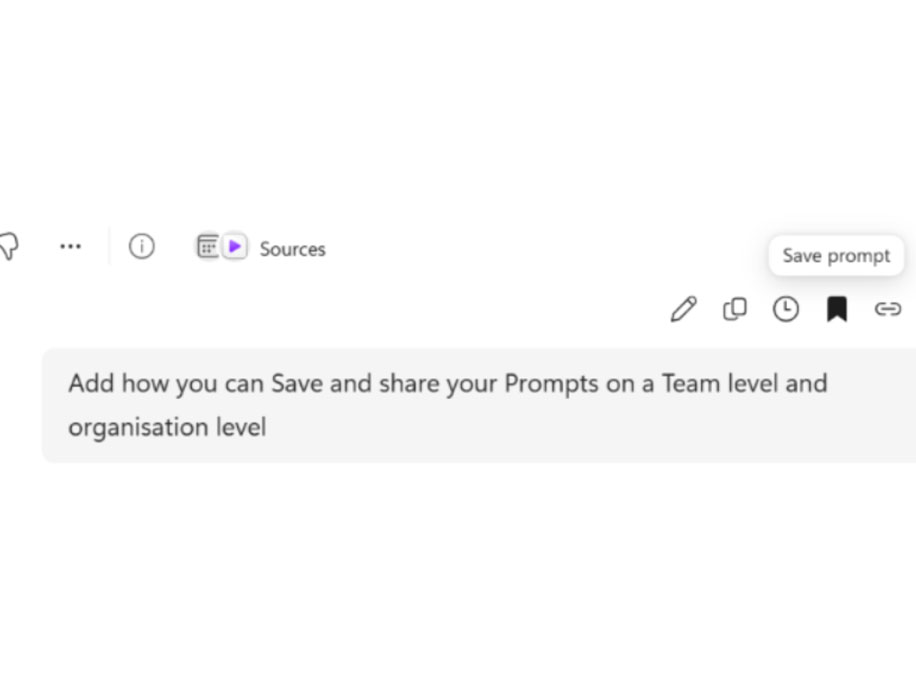
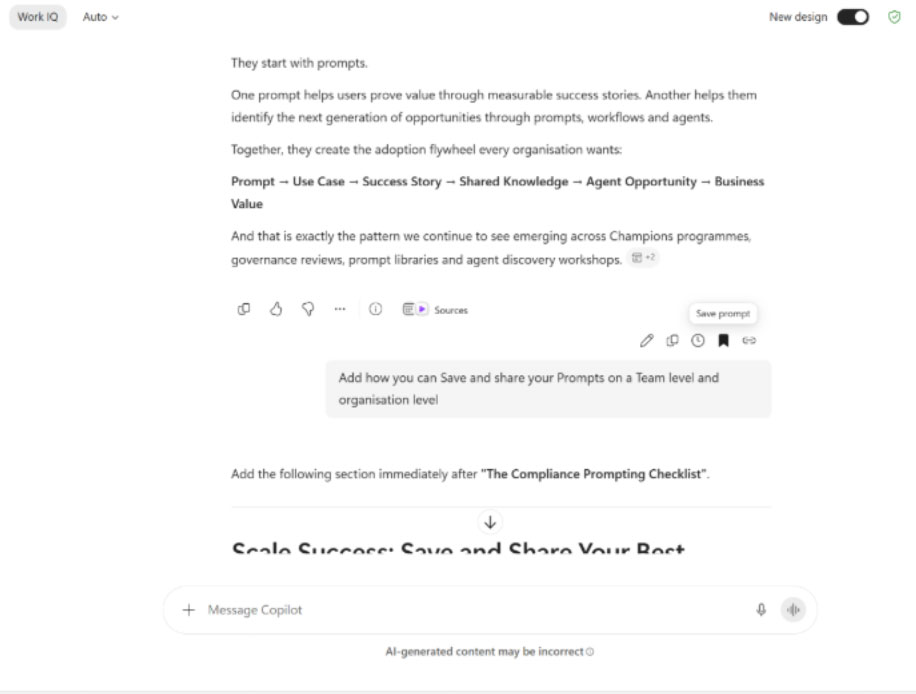
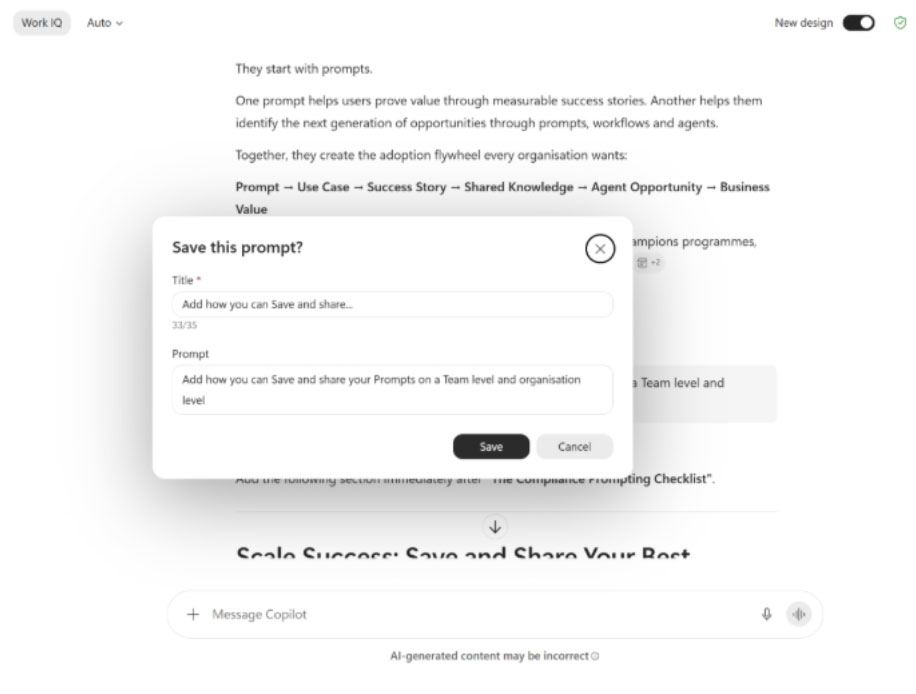
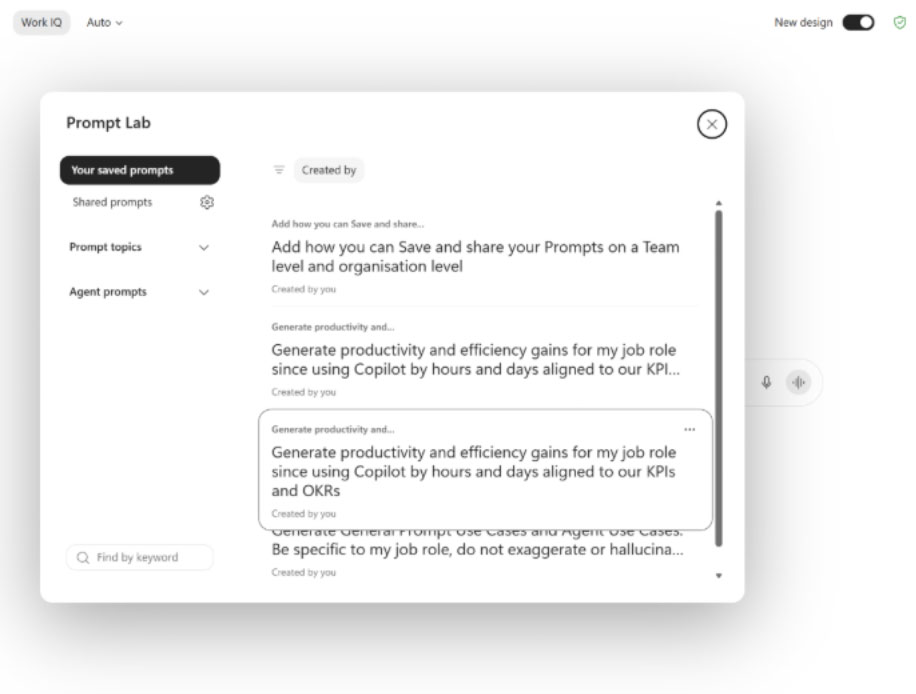
How to save prompts
Click to zoom...
Scale what works
That's how small AI wins become organisational capability.
And that's how you move from using AI to making AI operational.